Day Two at AI for Good 2026 Geneva: Robots, Drones and the Human Question at the Heart of AI
Day 1 of the AI for Good Global Summit was about conversation with governments, NGOs and professionals asking the big questions about AI governance, upskilling and human rights. Day 2 was about seeing what those conversations are actually building toward.
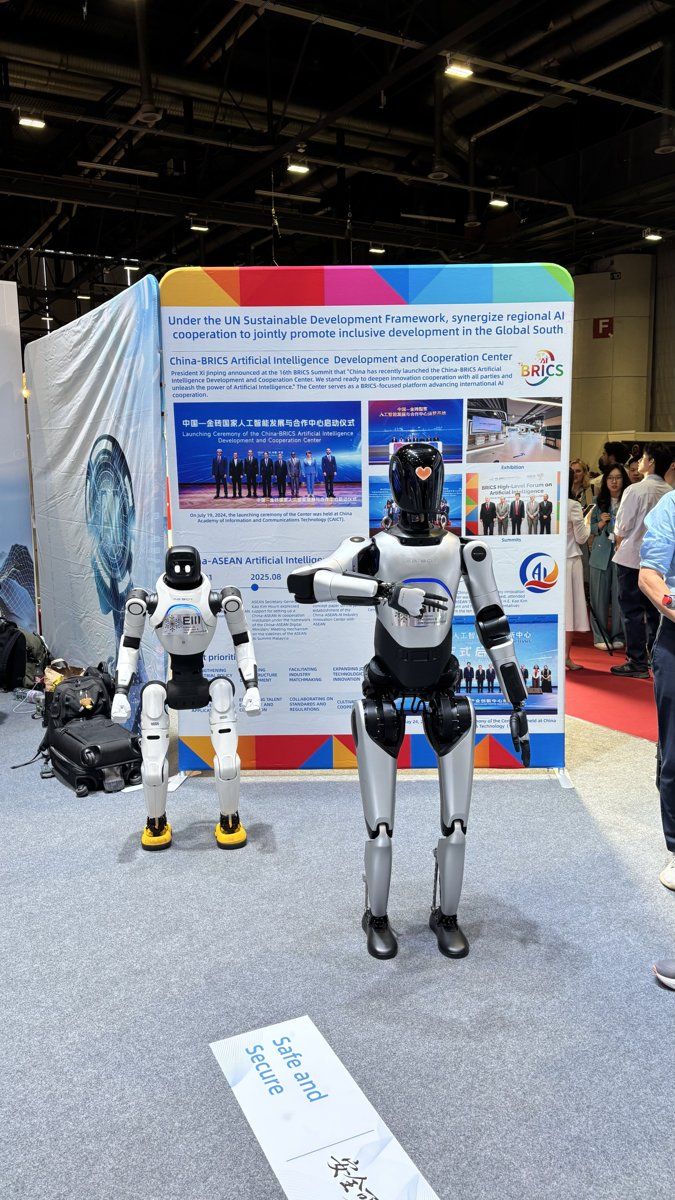
Today, the exhibition floor came alive with some of the most striking demonstrations of applied AI we have encountered: humanoid robots moving through crowds, autonomous drone systems, and interactive humanitarian AI tools designed to save lives.
But as Darren Winter, our Company Director, observed: "Every robot on display here, every drone system, every AI prototype, behind it is a team of humans who had to learn how to build it, govern it and use it responsibly. The technology is the headline; the education is the foundation."
The robots are here — and they are more human than you might expect
The humanoid robots on display at AI for Good 2026 stopped visitors in their tracks, and for good reason; these are no longer science fiction. White bipedal robots moved with fluid, naturalistic motion, responding to their environment in ways that would have seemed remarkable even five years ago.
Drones, autonomy and the governance gap
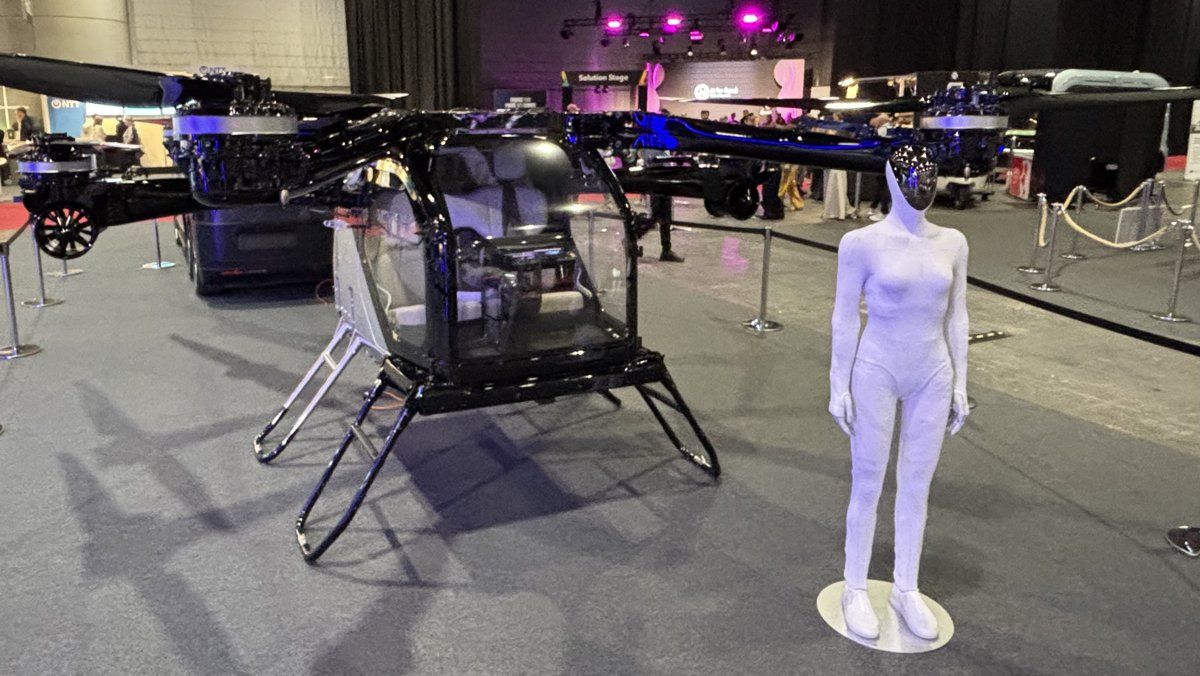
Alongside the humanoid robots, drone technology occupied a significant portion of the exhibition floor. The systems on display ranged from agricultural and environmental monitoring drones to logistics and emergency response applications.
Build a humanitarian AI prototype in 20 minutes — the Swedish Red Cross
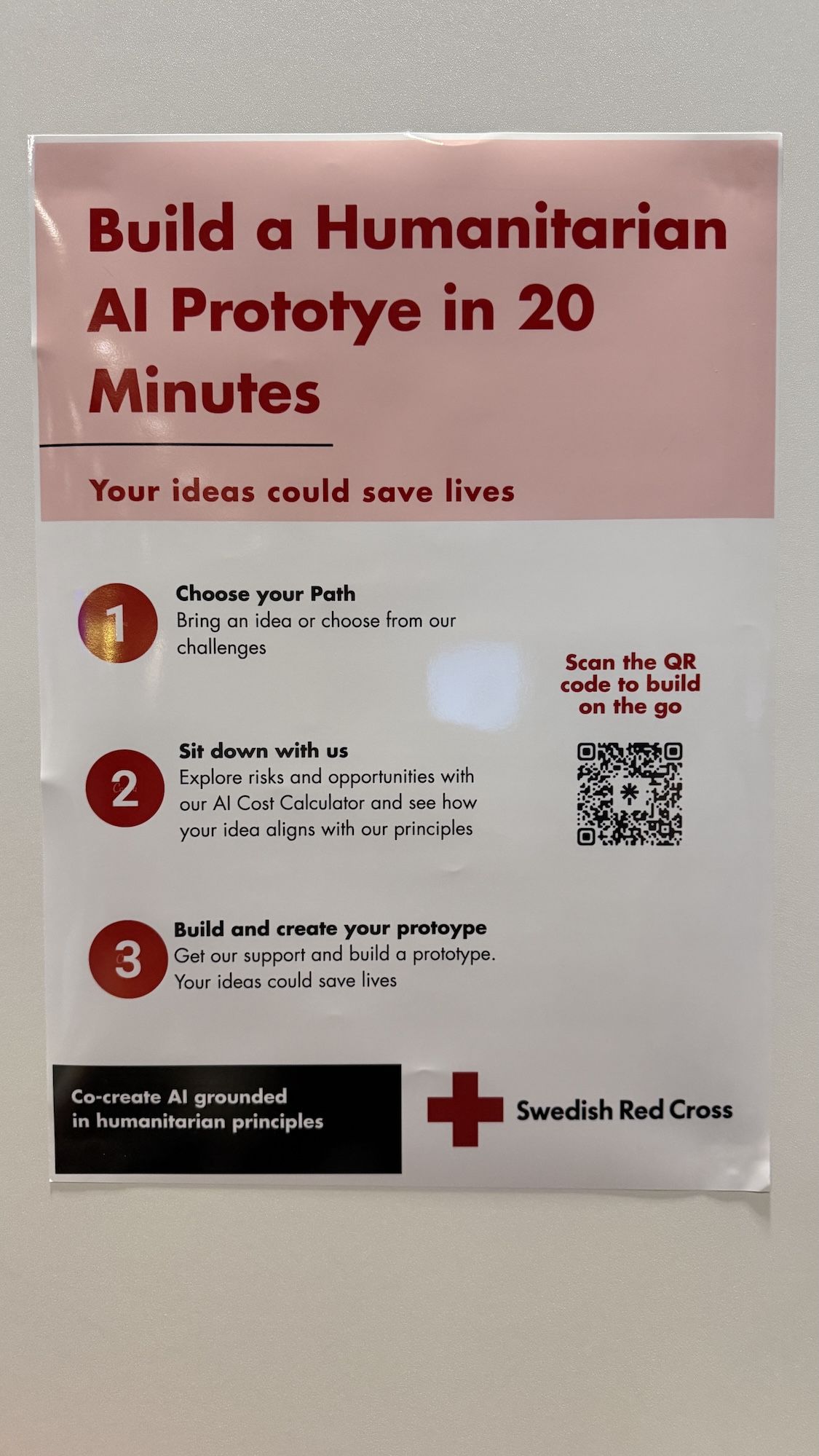
One of the most thought-provoking exhibits of the day belonged to the Swedish Red Cross, whose stand invited visitors to build a humanitarian AI prototype in just 20 minutes.
The concept was elegantly simple:bring an idea, or choose from a set of humanitarian challenges. Sit with the Red Cross team to explore risks and opportunities using their AI Cost Calculator, check your idea against their humanitarian principles, then build and prototype it with their support.
Humanitarian organisations are increasingly deploying AI in disaster response, refugee support, healthcare delivery and crisis communication. The Swedish Red Cross's approach, grounding AI development explicitly in humanitarian principles from the very first prototype, is, in our view, a model that should be far more widely adopted.
The most important AI governance should happen at the design stage, not the deployment stage.
By the time an AI system is live, the ethical decisions have already been made (if any), often without enough scrutiny.
The question the robots cannot answer
Amid all the remarkable technology on display today — the robots, the drones, the humanitarian prototypes — one question kept surfacing in our conversations. It came from a policy advisor, from an NGO director, from a technology manager at a manufacturing company: "How do we make sure the people in our organisation are ready for this?"
It is, ultimately, the question that every other question leads back to. The robots are impressive. The drones are capable. The AI systems are increasingly powerful. But none of them govern themselves. None of them make their own ethical decisions. None of them take responsibility for their own outputs.
That remains, for now, a human task. And it requires humans who are educated, credentialled and genuinely equipped to do it well.
Write your awesome label here.
Write your awesome label here.
Write your awesome label here.
Write your awesome label here.

Award-winning online training for professionals and teams, accredited by BCS and The Corporate Governance Institute.
Courses
Career Pathways

© 2026 Duco Digital LTD.
Registered in England 11214938.
VAT number 371532213.