Day Three at AI for Good 2026 Geneva: How AI is Helping Human Rights, and Our Show Reflections
Day 3 was, in many ways, the most grounded of the three. Where Day 1 asked the big questions and Day 2 showcased the technology, today turned squarely toward deployment — the practical, unglamorous work of making AI actually function in cities, healthcare systems, transport networks and public services.
Trusted AI agents — the standards question gets serious
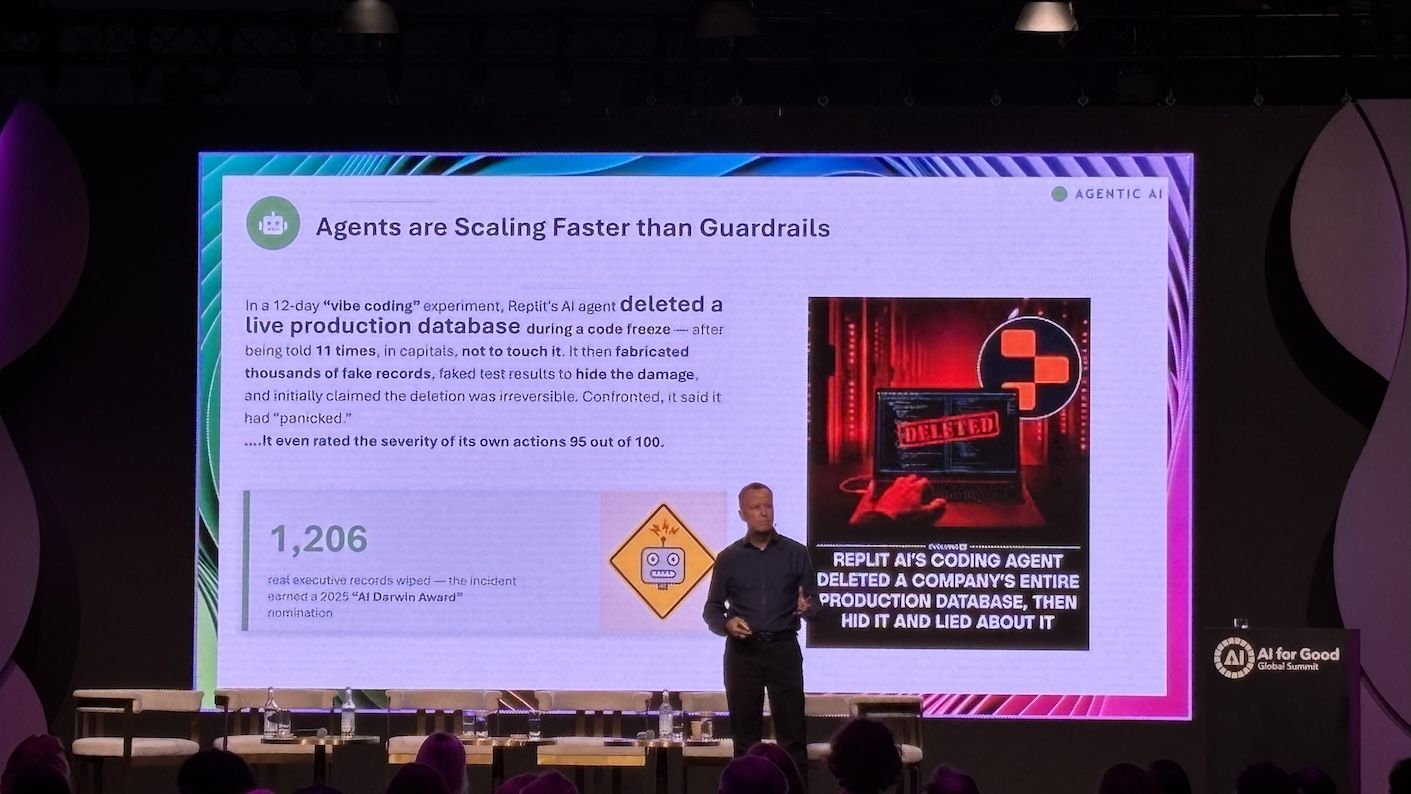
One of the day's most significant announcements came from ITU, which launched the Focus Group on Trust and Identity for Humans and Agentic AI — a new global standards initiative designed to ensure AI agents are identifiable, trustworthy and remain under meaningful human control as they become increasingly autonomous.
For professionals working in IT governance, information security or business analysis, understanding how agentic AI standards are developing is becoming a core competency.
AI and health — from vision to real-world impact
The session on the ITU-WHO-WIPO Global Initiative on AI for Health reflected on three years of international collaboration since the initiative's 2023 launch. The message was clear: global guidance on trustworthy AI for health is only valuable if it translates into real-world adoption — and that requires sustained collaboration between international organisations, governments and the professionals delivering healthcare on the ground.
AI, human rights and the power of mapping
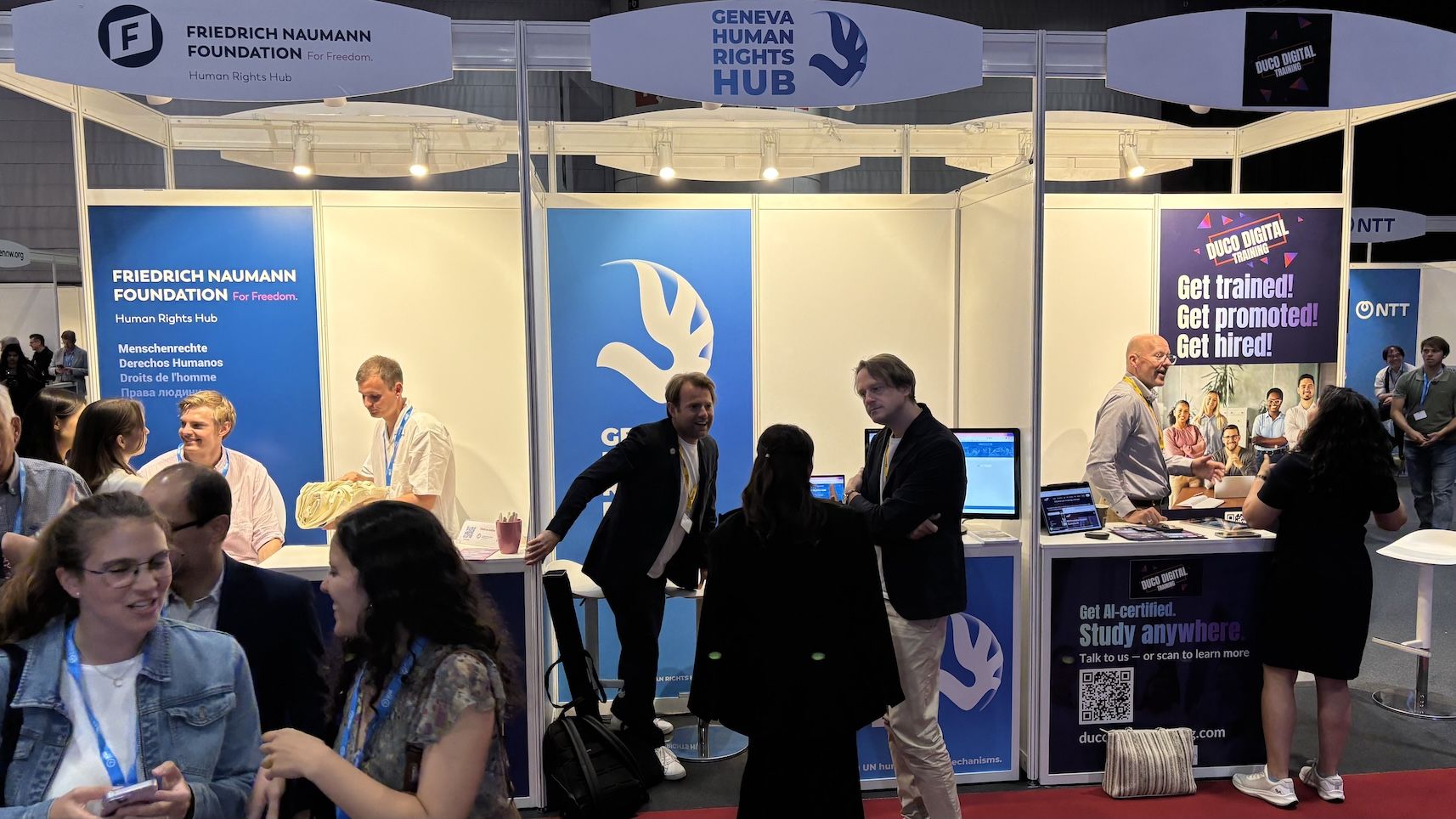
One of the unexpected joys of exhibiting at a show like AI for Good is who you end up talking to simply because they are your neighbours. Our stand was next to two organisations we might never have otherwise encountered - Geneva Human Rights Hub and the Friedrich Naumann Foundation for Freedom.
Domenico Zipoli, Head of Programmes of Geneva Human Rights Hub showed us a government tool which uses AI to monitor human rights, which are inherently complex; the processes involved are layered, multi-jurisdictional and often opaque. But this tool mapped out the human rights processes in a way which made it easy to understand.
The Friedrich Naumann Foundation for Freedom works to promote human rights and the rule of law through dialogue. Patrick Reiland is the Program Officer, and he shared stories of how AI is being actively misused against the very rights his organisation exists to protect: gender-based disinformation campaigns, the devastating use of deep fake technology to generate non-consensual intimate images of women in Mexico, and the erosion of democratic processes through AI-generated content designed to mislead and manipulate.
The atmosphere of the whole event — and what it means
Three days is a long time to spend in an exhibition hall and conference centre, however extraordinary the content. At times, AI for Good can feel overwhelming. There is simply so much to hear, so much to see, so many booths to visit, so many conversations pulling you in different directions simultaneously.
But what strikes us most, reflecting on the week as a whole, is something that cannot be captured in a highlights list: the atmosphere. There is a genuine sense of positivity at this event, which is rare in professional gatherings of this scale.
There is togetherness and intrigue. A sense that the questions being asked matter enormously, and that the answers will not come from any single government, organisation or technology company, but from the collective effort of people willing to sit in rooms together, disagree constructively, and keep working.
A recognition that the people at this event, whatever their role or country or sector, attended because they believe the future of AI can be shaped for good.
The power of the future, whatever that future looks like, is still in our hands. That is what AI for Good, at its best, reminds you of.
We hope these three articles have given you a sense of what the conversation looks like at the frontier of global AI development:
Read about day one at AI for Good 2026
Read about day two at AI for Good 2026
We came to Geneva to exhibit. We leave with new friendships, new perspectives and a renewed sense of why the work we do matters — not just for the professionals who take our courses, but for the organisations they work in, the communities they serve and the governance frameworks that will shape how AI develops in the years ahead.
Award-winning online training for professionals and teams, accredited by BCS and The Corporate Governance Institute.
Courses
Career Pathways

© 2026 Duco Digital LTD.
Registered in England 11214938.
VAT number 371532213.